
0%


Electronic Scientific Journal “Modern Economics”
The mission of the journal is to highlight modern trends, challenges, and innovations shaping the future of economic science and practice through the publication of the results of promising scientific research.
The Editorial Board of the electronic scientific journal “Modern Economics” aims to achieve the following objectives:
Founder and Publisher: Mykolaiv National Agrarian University
Official journal page on the publisher’s website:
“Modern Economics”
EDRPOU Code: 00497213
ROR of the publisher and founder:
https://ror.org/03zjvmt75
Year of establishment: 2016
Publication frequency: Six issues per year
Editor-in-Chief: Nataliia Mykolaivna Sirenko
Executive Secretary: Olena Andriiivna Bodnar
The electronic scientific journal “Modern Economics” is included in the list of electronic periodicals classified under Category B of the official list of scientific professional publications of Ukraine (field: Economic Sciences), in which the results of dissertation research for obtaining scientific degrees (Doctor and Candidate of Sciences) may be published (Order of the Ministry of Education and Science of Ukraine dated November 7, 2018, No. 1218), in the following specialties:
Journal cluster according to the Order of the Ministry of Education and Science of Ukraine dated February 19, 2026:
Economic Transformation, Business and Administration.
C1 Economics and International Economic Relations (by specializations),
D1 Accounting and Taxation,
D2 Finance, Banking, Insurance and Stock Market,
D3 Management,
D4 Public Administration and Governance,
D5 Marketing,
D7 Trade,
J3 Tourism and Recreation.
In 2017, the ISSN International Centre (Paris) included the electronic scientific journal “Modern Economics” in the international register of serial publications and assigned it the international identification number: ISSN 2521-6392 (Online).








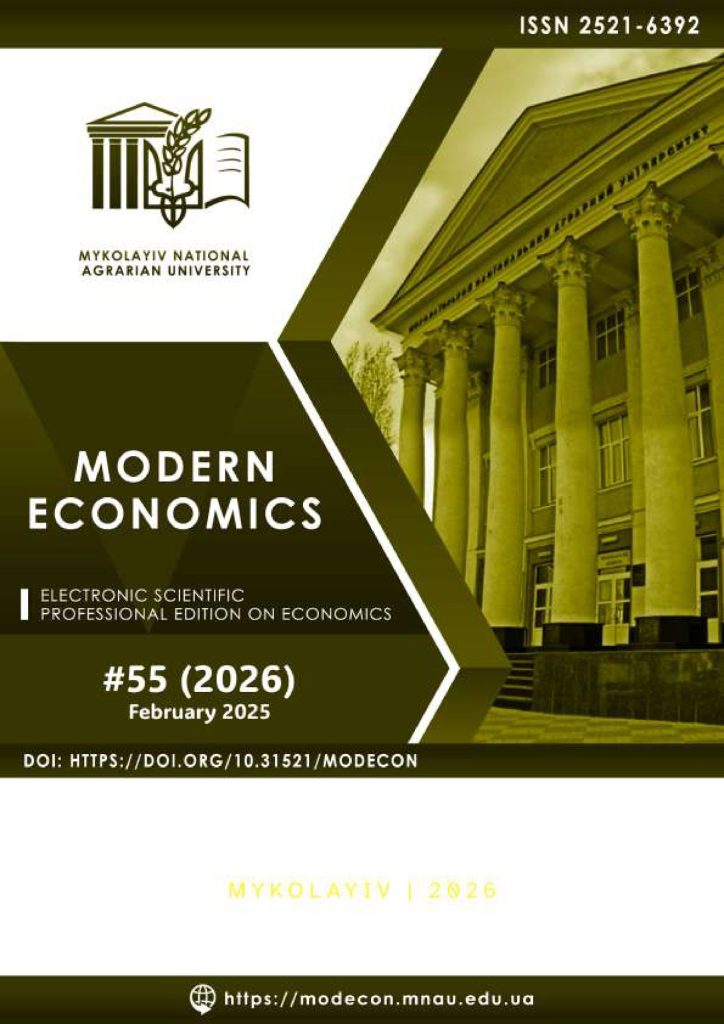
Materials which are submitted for publication in Electronic Scientific Professional Edition on Economics «Modern Economics» must pass an anonymous review, a check for plagiarism, and be recommended by Academic Council of the Mykolayiv National Agrarian University before publication.
The «Modern Economics» electronic academic journal adheres to international standards of academic integrity, including the COPE guidelines and the principles of Elsevier’s Publishing Ethics Resource Kit (PERK), and strives to ensure transparency, objectivity and professional accountability at all stages of the editorial process.
Ethical Principles of Editorial Activity
The Editorial Board adheres to the following fundamental principles:
The editorial decision-making process
The final decision on publication is made by the Editor-in-Chief based on reviews, the relevance of the topic and the scientific novelty of the article. Editors evaluate submissions solely on the basis of academic criteria – regardless of the authors’ gender, nationality, political or religious beliefs. Unpublished data are not used in the editors’ own research without the authors’ written consent.
Confidentiality and Impartiality
All materials submitted for publication are treated as confidential documents. Information regarding the authors, the content or the peer-review process is not disclosed to third parties, except those directly involved in the work on the manuscript. Editors, reviewers and consultants shall refrain from participating in the evaluation of articles if there is a conflict of interest (co-authorship, financial or personal interest).
Responsibilities of those involved in the editorial process
Editorial Board
Reviewers
Authors
Authorship
Submission of an article confirms that all authors:
If a significant error is discovered after publication, the author must notify the editorial board so that it can be corrected or the article withdrawn.
Ethical standards of research
Research involving human subjects
Must be approved by the relevant ethics committee. Authors must confirm voluntary participation, written informed consent, anonymity and the absence of discrimination.
Open data and transparency
The journal supports the principles of open science, but the transfer of raw data is only possible upon formal request and with the authors’ permission. All requests for access to data must be submitted via the editorial office. In the event of a refusal by the authors, the editorial office will inform the applicant, whilst respecting their right to confidentiality.
Post-publication discussion
The journal supports open discussion of publications on the PubPeer platform. Comments must be professional and scientifically sound. All reports of potential misconduct are handled in accordance with the journal’s ethical policy and retraction guidelines.
Funding and advertising policy
The journal does not publish advertisements and has no commercial partnerships.
The journal is committed to ensuring objectivity and transparency in the publication process; therefore, all authors, reviewers and editors must declare any potential conflicts of interest. This policy aims to prevent conflicts of interest from influencing research outcomes and the decision-making process regarding publication.
Conflicts of interest on the part of authors
Authors must disclose all potential conflicts of interest at the time of submission. This applies to both financial relationships, such as direct employment, honoraria, shareholdings or patent ownership, and non-financial relationships, such as personal connections, academic rivalry, or ideological or religious beliefs. All conflicts must be clearly identified so that readers can judge whether the authors may have been subject to a particular bias and how this might have affected the work.
Conflicts of interest on the part of reviewers
Reviewers must declare any conflicts of interest that might affect their ability to evaluate the manuscript objectively. Reviewers must immediately inform the editorial team if:
If a conflict is identified, reviewers must decline to review the manuscript.
Conflicts of interest on the part of editors
Editors are also required to declare potential conflicts of interest that may affect their ability to make impartial decisions regarding articles. Editors must recuse themselves (withdraw) from the review of articles if:
In such cases, the editor must refer the article to another editor or involve an independent expert.
The journal guarantees transparency in the disclosure of conflicts of interest, which, where applicable, are published as a note at the end of each article. All participants in the publication process (authors, reviewers, editors) are required to adhere to this policy to ensure the integrity and objectivity of scientific communication.
The «Modern Economics» electronic academic journal is an open-access publication, which means that all its content is available free of charge to all readers and their institutions. No open-access fees are charged.
Access rights
All articles published in open access will remain permanently available for reading, downloading, copying and distribution.
The «Modern Economics» electronic academic journal is licensed under the Creative Commons Attribution License International (CC-BY).
All users who utilise material from this publication are required to cite the original work and its authors appropriately. This includes copyright information and a reference to the source of the publication.
The author reserves the right, without consulting the editorial board, to use the materials of the article in the following ways:
It is necessary to comply with the terms of the Creative Commons Attribution License International (CC-BY) when using materials from the journal’s publications.
User Rights
Permitted reuse by third parties is governed by the Creative Commons Attribution (CC BY) licence, which allows users to copy, create extracts, summaries and new works based on the article, modify and adapt the article, and make commercial use of the article (including reuse and/or resale of the article by commercial entities) provided that the user provides appropriate attribution (with a link to the official publication via the relevant DOI), provides a link to the licence, indicates if changes have been made, and the licensor is not presented as endorsing the use of the work.
Authors’ Rights
Authors retain copyright alongside the rights to academic use, whilst the «Modern Economics» electronic academic journal acquires the rights to publish and distribute the work.
Full-text access to the journal’s academic articles is available in the Archive section. This complies with the Budapest Open Access Initiative’s definition of Open Access.
The publication implements basic procedures designed to ensure permanent access to content hosted on its servers. In particular, it backs up materials and monitors the technical condition of the platform in order to mitigate risks associated with potential software obsolescence or changes in file formats.
To support long-term access to publications, the journal utilises digital preservation metadata and employs Digital Object Identifiers (DOIs), which ensure the stability of links to academic materials.
In addition, the journal deposits metadata and full-text articles in national and international repositories, including the Institutional Repository of Mykolaiv National Agrarian University, as well as in the collections of the V.I. Vernadsky National Library of Ukraine, with the aim of further ensuring the long-term preservation and accessibility of scientific content.
The editorial board of the «Modern Economics» electronic academic journal is committed to dealing with all enquiries, complaints and appeals relating to editorial or publication activities in a prompt, impartial and constructive manner. All cases are handled in accordance with the recommendations of the Committee on Publication Ethics (COPE), taking into account the nature and complexity of the situation.
Complaints
Reports of potential breaches of ethical standards should be sent to the official email address: modecon@mnau.edu.ua.
Complaints should be concise, well-reasoned and contain sufficient facts and, where possible, supporting documentation.
The editorial board considers all reports within 30 working days, but in critical cases this period may be extended.
Reports submitted in an inappropriate, offensive or defamatory manner will not be considered. If the matter falls outside the publication’s remit, the complainant will receive an official response explaining the reasons for the refusal.
Appeals
Authors have the right to appeal against an editorial decision if they consider it unfounded or biased.
An appeal may relate to:
Appeals must be submitted in writing to modecon@mnau.edu.ua within 30 calendar days of receiving the decision. The appeal must include the title of the article, substantiated arguments and, where available, additional materials.
The appeal is considered by the editor-in-chief or another member of the editorial board who did not participate in the initial decision. If necessary, a re-review by an independent expert may be arranged.
The review takes up to 30 days, after which the author receives a written response with the final decision.
The decision made following the appeal is final and cannot be reviewed.
Resolving violations
If violations are confirmed, the editorial board will take the necessary measures to resolve them, which may include, but are not limited to:
Further information on the procedures for handling violations can be found in the «Policy on Retraction of Publications » section.
The editorial board of the «Modern Economics» electronic academic journal guarantees the complete confidentiality of the personal data of users, authors and reviewers.
Names, email addresses and other information provided during registration or interaction with the journal are used solely for purposes related to the editorial process and are not disclosed to third parties.
The journal adheres to international data protection standards, in particular the requirements of the EU General Data Protection Regulation (GDPR).
The editorial board guarantees users’ right to access, rectify or erase their personal data, as well as the right to be notified of any breaches of their privacy.
Data is collected and used solely for the purpose of supporting scientific communication, ensuring the reliability of publications and preserving the integrity of scientific records.
«Modern Economics» electronic academic journal adheres to COPE principles and takes measures to ensure academic integrity, avoiding instances of plagiarism, duplication, data fabrication or other forms of academic misconduct.
Ethical violations
The editorial board does not accept:
All such cases are considered in accordance with COPE guidelines, with the possible application of sanctions, refusal to publish or retraction of the article .
Corrections, erratums and corrigenda
If an inaccuracy or technical error is found in a published article, the editorial board may publish:
Corrections may be initiated by authors, readers or the editorial board. Following verification and approval, a separate document marked “Correction” is published, linked to the original article.
Retraction (Withdrawal of an article)
Retraction is applied if:
Following the editorial decision to retract:
Complete removal is possible only in exceptional cases – for example, in the event of a breach of legislation, copyright or security issues.
Expression of Concern
If there are concerns regarding the accuracy of the data but insufficient evidence for retraction, the editorial board may publish an “Expression of Concern” with its own DOI. It remains available until the investigation is concluded.
Review procedure
Voluntary withdrawal of a manuscript
Authors may withdraw a manuscript prior to publication by submitting a formal letter explaining the reasons, signed by all co-authors. In such cases, the work will be removed from the journal’s databases, but copyright remains with the authors.
«Modern Economics» electronic academic journal accepts for publication only original academic works that have not been previously published and comply with the principles of academic integrity.
Authors bear full responsibility for the correct citation and use of others’ work.
Each manuscript must:
The editorial board checks submitted materials using the StrikePlagiarism system, which determines the level of textual similarity in databases and on the internet.
Assessment is carried out according to the following criteria:
The detection of plagiarism in any form is considered a breach of academic publishing ethics.
If plagiarism is detected after publication, the editorial board conducts an investigation, informs the authors and, if necessary, takes a decision in accordance with the journal’s publication ethics policy. Plagiarism checks are carried out using the StrikePlagiarism software.
1. General Terms
This policy sets out the principles for the responsible use of generative artificial intelligence in the preparation, submission, peer review and editorial processing of scientific manuscripts. The document is aligned with international standards of academic integrity recommended by the Committee on Publication Ethics (COPE), as well as the editorial policies of Elsevier and Springer. The policy aims to ensure transparency, accuracy and trust in scientific results obtained with the use of digital technologies. .
2. Authors’ use of generative AI
Authors may use generative AI tools as an auxiliary tool, for example, for proofreading, stylistic editing, technical translation, refining phrasing, or structuring text. Generative artificial intelligence may also be used for code analysis, calculations and statistical operations, provided that the results are verified by the author. The creation of supplementary illustrative materials is permitted; however, authors bear full responsibility for their accuracy.
At the same time, generative artificial intelligence may not be used to create fictitious data, quotations, literary sources or artificially generated ‘research results’. It is prohibited to use generative models to produce content that is presented as an original scientific contribution without the author’s actual involvement. It is also not permitted to upload confidential, unpublished or protected data to artificial intelligence tools.
3. Disclosure of the use of generative AI
Authors are required to transparently disclose any use of generative artificial intelligence in the process of creating the manuscript. Such a disclosure must be included in the ‘Main Body of the Research’ section, specifying the name of the tool used, its version (if available), and a clear description of the specific stages of text preparation or analysis in which it was applied.
Generative artificial intelligence cannot be listed as a co-author, as it is not capable of taking responsibility for the content of the work. Responsibility for the reliability of data, the accuracy of statements, the correctness of references and compliance with ethical standards lies entirely with the authors.
4. Use of generative AI by reviewers
Reviewers are prohibited from feeding the content of manuscripts into third-party generative AI models, as this contravenes the principle of confidentiality as defined by COPE. Reviews must not be created entirely or substantially by artificial intelligence tools. Only the technical use of such tools to improve the language or structure of the reviewer’s own text is permitted, without revealing the content of the manuscript.
5. Use of generative AI by the editorial team
The editorial team may use generative AI tools for technical and administrative tasks, for example, to improve the linguistic quality of supporting communications or to automate organisational processes. The editorial team does not use such tools to make editorial decisions, alter the content of manuscripts, or process confidential materials without editorial oversight.
6. Authors’ Responsibility
Authors bear full responsibility for all scientific findings, data, statements, citations and interpretations presented in the manuscript, regardless of whether generative artificial intelligence was used. If artificial intelligence tools have caused inaccuracies, errors or breaches, the responsibility for rectifying them or for the consequences remains with the authors. In cases of policy breaches, the editorial board reserves the right to request revisions, reject the manuscript or apply ethical procedures in accordance with COPE recommendations.
7. Policy Updates
The policy may be reviewed and updated in line with developments in generative artificial intelligence technologies, improvements in international standards, and changes in scientific communication practices.
№ випуску | Дата подання матеріалів | Дата розміщення матеріалів |
|---|---|---|
55 (2026) | 23.02.2026 | кінець березня 2026 |
56 (2026) | 25.04.2026 | Кінець травня 2026 |
57 (2026) | 25.06.2026 | Кінець липня 2026 |
58 (2026) | 25.08.2026 | Кінець вересня 2026 |
59 (2026) | 25.10.2026 | Кінець листопада 2026 |
60 (2026) | 25.12.2026 | Кінець січня 2027 |
If you have questions to the Editor, please send a message through the form provided:

Doctor of Economics, Professor, Director of the Vinnytsia Educational and Scientific Institute of Economics of the Western Ukra...

Doctor of Economics, Professor, Director of the Vinnytsia Educational and Scientific Institute of Economics of the Western Ukra...

Doctor of Economics, Professor, Professor of the Department of Accounting, Analysis and Control, Ivan Franko National Universit...

PhD of Economic Sciences, Associate of the Department of General Economic Theory and Economic Policy, Odessa National Economic ...

Doctor of Economics, Professor, Head of the Department of Socio-Economic Development of Rural Territories, National Research Ce...

Doctor of Economics, Professor, Dean of the Faculty of Accounting and Finance, Dnipro State Agrarian and Economic University, D...

Doctor of Economics, Professor, Head of the Department of Accounting and Taxation, Uman National University, Uman, Ukraine
...
Doctor of Economics, Professor, Professor of the Department of Marketing, Lutsk National Technical University, Ukraine
<...
Doctor of Economics, Professor, Professor of the Department of Marketing, Lutsk National Technical University, Ukraine
<...
Doctor of Economic Sciences, Professor, Professor of the Department of Food and Material Supply, Military Academy, Odesa, Ukra...

Doctor of Economics, Associate Professor, Head of the Department of Banking, Odesa National Economic University, Odesa, Ukraine...

PhD of Economic Sciences, Associate Professor, Head of the Department of Finance, Banking and Insurance, Lutsk National Technic...

Doctor of Economics, Professor, Professor of the Department of Accounting and Taxation, National University of Life Resources a...

Doctor of Economics, Professor, Professor of the Department of Finance, State University of Trade and Economics, Kyiv, Ukraine<...

Doctor of Economics, Professor, Professor of the Department of International Trade, Customs and Financial Technologies, Kharki...

PhD of Economic Sciences, Associate Professor, Head of the Department of Public Management and Administration, Sumy National Ag...

PhD, Associate Professor, Stefan cel Mare University of Suceava, Suceava, Romania
Profiles in science-based databases...

PhD, Associate Professor, Faculty of Economics, Administration and Business, Stefan cel Mare University of Suceava, Suceava, Ro...

Doctor of Economics, Professor, Professor of the Department of Tourism Economics and Management, Academy of Economics named aft...

Assistant Professor Department of Corporate Resources Management, Poznań University of Economics and Business, Poznań, Poland...

Ph.D., Assoc. Prof., Department ofAccounting, Audit and Finance, Stefan cel Mare University, Suceava, Romania
Profile...

PhD of Economic Sciences, Associate Professor, Associate Professor of the Department of Accounting and Taxation, Mykolaiv Natio...

Doctor of Economics, Professor, Head of the Department of Finance, Banking and Insurance, Mykolaiv National Agrarian Universit...

PhD of Economic Sciences, Associate Professor, Associate Professor of the Department of Finance, Banking and Insurance, Mykolai...

Doctor of Economics, Professor, Professor of the Department of Hotel and Restaurant Business and Tourism, Mykolaiv National Ag...

PhD of Economic Sciences, Associate Professor, Associate Professor of the Department of Finance, Banking and Insurance, Mykolai...

Doctor of Economics, Professor, Head of the Department of Financial Management and Stock Market, Odesa National Economic Univer...

Doctor of Economics, Professor, Professor of the Department of Public Management and Administration and International Economics...

Doctor of Economics, Professor, Head of the Department of Management, Business and Administration, Mykolaiv National Agrarian ...

Doctor of Economics, Professor, Professor of the Department of Accounting and Taxation, Mykolaiv National Agrarian University, ...

Doctor of Economics, Professor, Head of the Department of Accounting and Taxation, Mykolaiv National Agrarian University, Myko...
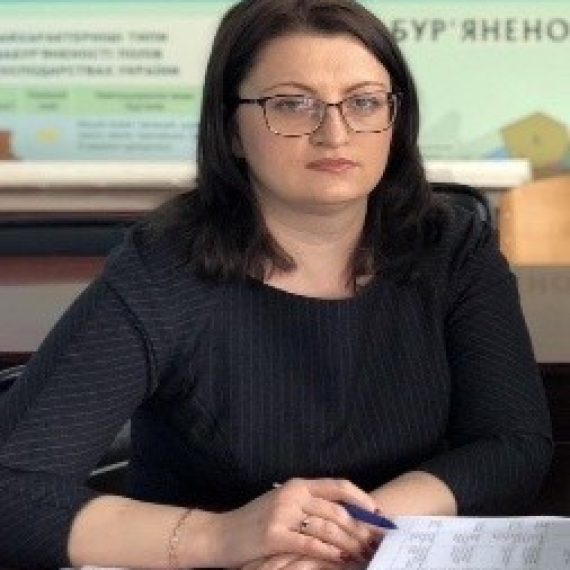
Doctor of Economics, Professor, Head of the Department of Public Management and Administration and International Economics, Myk...
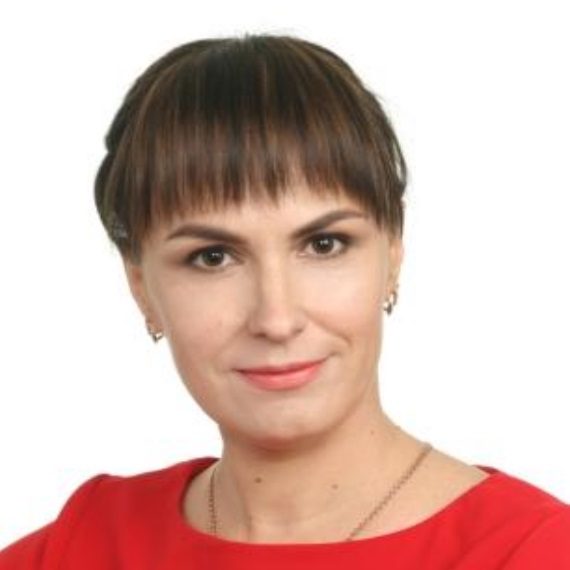
Doctor of Sciences (Economics), Professor, Professor of the Department of Accounting and Taxation, Mykolayiv National Agrarian ...

Doctor of Sciences (Economics), Professor, Vinnytsia Educational and Scientific Institute of Economics of Ternopil National Eco...

Doctor of Economics, Professor, Dean of the Faculty of Management, Mykolaiv National Agrarian University, Mykolaiv, Ukraine

Doctor of Economic Sciences, Associate Professor, Dean of the Faculty of Retraining and Advanced Training, Mykolaiv National A...

PhD of Economic Sciences, Associate Professor, Associate Professor of the Department of Finance, Banking and Insurance, Mykolai...

PhD of Economic Sciences, Associate Professor, Associate Professor of the Department of Accounting and Taxation, Mykolaiv Nati...

PhD of Economic Sciences, Associate Professor, Associate Professor of the Department of Accounting and Taxation, Mykolaiv Natio...

PhD of Economic Sciences, Associate Professor, Associate Professor of the Department of Public Management and Administration an...




 Українська